Legacy BMS Modernization to Niagara N4 at a Telecom Infrastructure Facility
How TAS designed a Niagara N4-based Lynxspring platform to modernize a legacy Johnson Controls Metasys BMS at a critical telecom infrastructure site — delivering scalability, open interoperability and long-term maintainability while preserving full operational continuity. Installation and commissioning is being carried out by a third-party execution partner and is currently in progress.

Overview
A critical telecommunications infrastructure facility was operating its building management system on a legacy Johnson Controls Metasys platform. After more than a decade of service, the proprietary system had become an operational and commercial liability — limited integration options, dwindling spares availability, escalating support costs and an architecture that could no longer accommodate the facility’s growth and modernization roadmap.
TAS India was engaged to design a complete modernization to a vendor-neutral, open BMS built on the Tridium Niagara N4 framework with Lynxspring JENEsys controllers — preserving every existing field device wherever feasible while replacing the supervisory and control layers end-to-end. Field installation and commissioning of the design is being executed by a third-party systems integration partner, with the cutover currently in progress.
The Challenge
An aging proprietary BMS at a 24×7 facility
The incumbent Metasys system could no longer be safely extended, integrated with modern IT systems, or economically supported. Yet the facility runs mission-critical telecom infrastructure — every chiller, AHU, UPS room cooler and DG-room exhaust must remain continuously controlled. There was no acceptable window for a “rip-and-replace” outage.
Specifically, the existing environment imposed five hard constraints on the modernization:
- ✓Proprietary lock-in — Metasys N2 trunk and N1 network limited integration with third-party HVAC, power and IT systems.
- ✓End-of-life hardware — NAE/NCE controllers and operator workstations were out of support, with spares becoming scarce.
- ✓Heterogeneous field bus — a mix of BACnet MSTP devices, Modbus RTU VFDs, ABB drives, Yaskawa and Trane chillers had to be retained.
- ✓Live cutover — CNC labs, equipment rooms, telecom rooms, UPS rooms, battery rooms, generator rooms and the cold room had to remain monitored throughout migration.
- ✓Future scalability — the replacement had to support browser-based access, enterprise integration and additional floors without forklift upgrades.
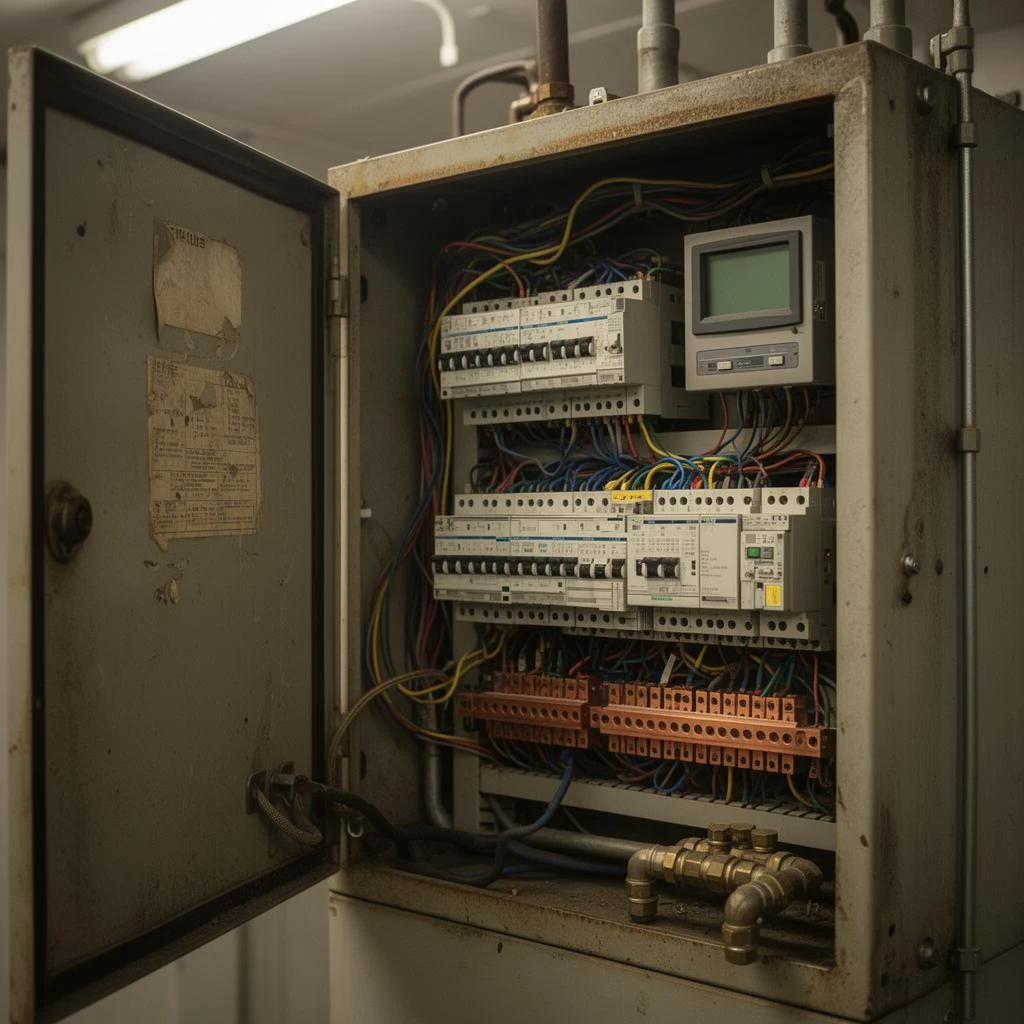
What the legacy environment looked like
Approach
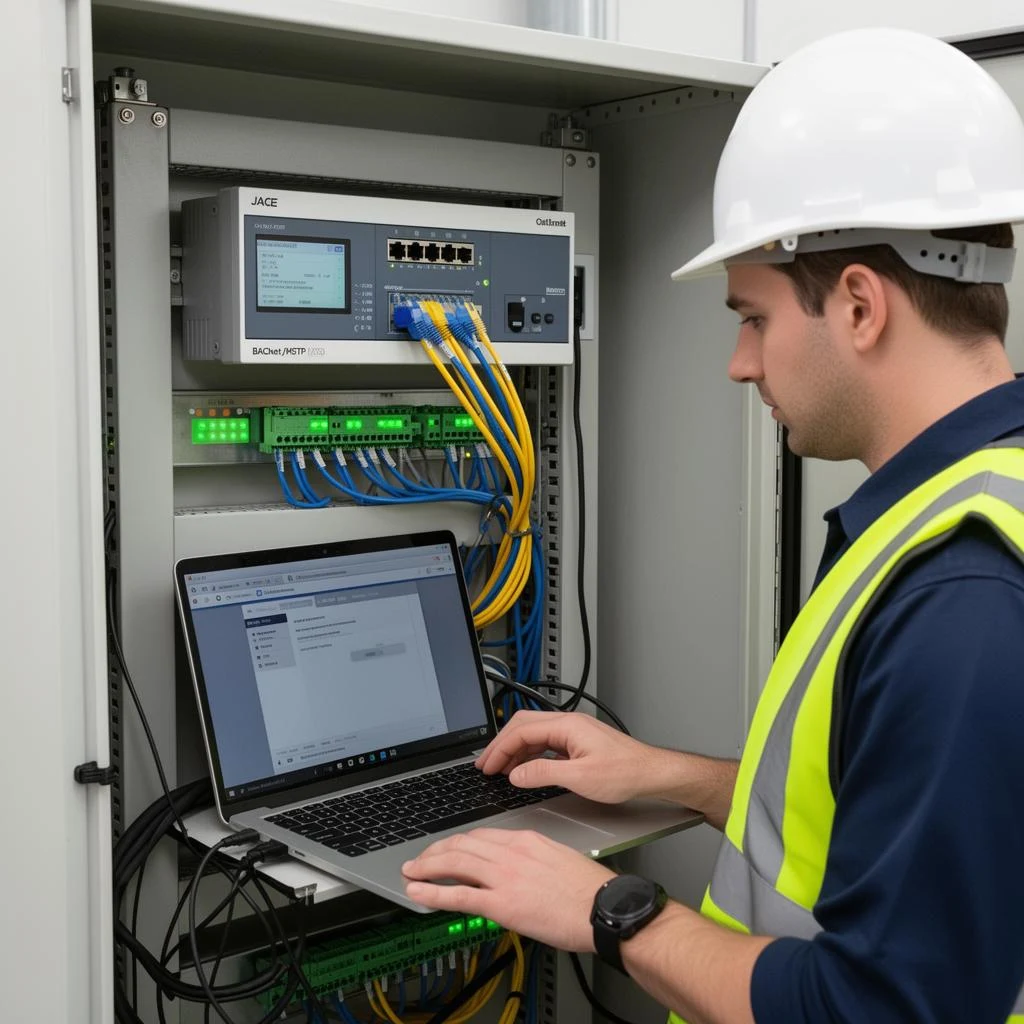
TAS India conducted a full point-by-point audit of the legacy Metasys installation — chillers, AHUs, FCUs, CRAC units, VFDs, MCC starters, BTU/energy meters, UPS, gensets, battery monitors and environmental sensors across mechanical, equipment, terminal, UPS, server, generator, battery and cold rooms. From that baseline, TAS designed a Niagara N4 supervisory architecture with Lynxspring JENEsys edge controllers and a structured CAT6 / Fox IP network backbone, anchored at the Building Automation Center.
The cutover is being executed by a third-party installation and commissioning partner in carefully scheduled phases — one MSTP trunk and one mechanical zone at a time — designed so the facility never loses monitoring or control. Existing BACnet/MSTP and Modbus RTU field devices are being re-pointed to the new JENEsys controllers via four MSTP trunks and two RS-485 Modbus segments, per TAS’s design, eliminating wholesale field-device replacement and protecting the customer’s capital investment. This work is ongoing at the time of writing.
Modernized System Architecture
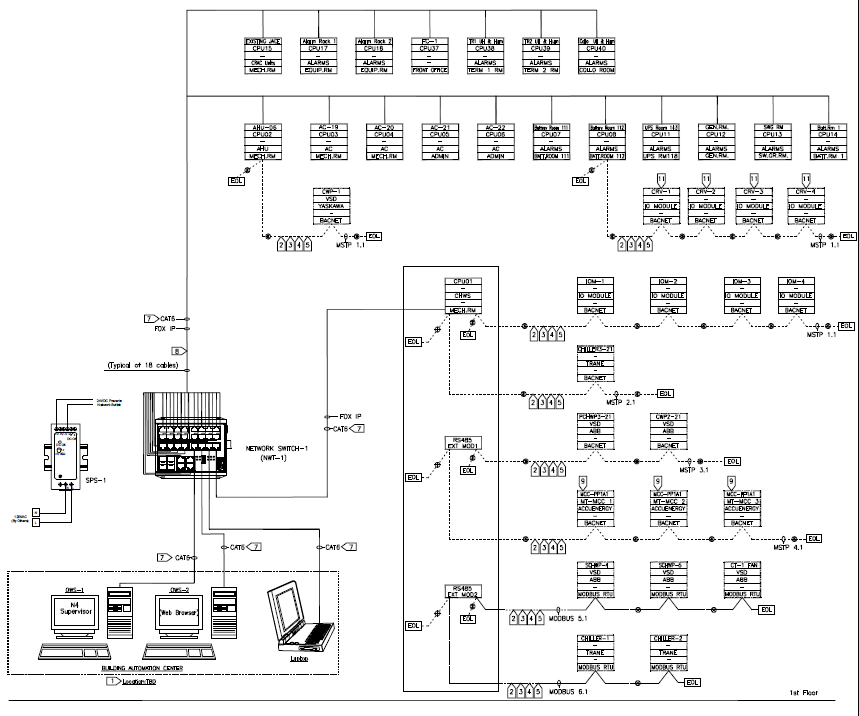
Modernized BMS architecture — N4 Supervisor and web-browser clients at the Building Automation Center connect over Fox IP / CAT6 through a managed network switch to a JENEsys edge controller serving four BACnet/MSTP trunks (HVAC, VFDs, chillers, MCC energy meters) and two RS-485 Modbus segments (ABB VSDs, Trane chillers), with environmental and alarm devices distributed across mechanical, equipment, terminal, UPS, server, generator, battery and cold rooms.
Solution Stack
Cutover Methodology
The migration follows a documented, low-risk pattern designed by TAS and executed on-site by the installation partner: (1) parallel-run the new JENEsys controller alongside the live Metasys panel; (2) validate every point — analog input, binary output, setpoint and alarm — against the legacy graphic; (3) transfer alarming and trending to N4; (4) decommission the legacy NAE/NCE and reclaim panel space once cutover of a given trunk is confirmed. Each MSTP trunk is migrated on a scheduled window with rollback procedures pre-approved by facility operations. As of this case study, cutover is in progress and not yet complete across all trunks.
Design Objectives & Expected Benefits
The modernization is designed to replace a closed, end-of-life Metasys system with an open, browser-accessible Niagara N4 platform — without an unplanned outage at a 24×7 telecom site. Installation and commissioning are being carried out by a third-party partner and are in progress; the objectives below reflect the design intent and will be confirmed as trunks are cut over and validated.
- ✓Vendor-neutral, open platform — Niagara N4 with Lynxspring JENEsys is designed to remove proprietary lock-in and enables third-party integration on standard protocols.
- ✓Preserved field investment — existing BACnet/MSTP and Modbus RTU devices are being retained and re-pointed as part of the ongoing installation, avoiding wholesale device replacement.
- ✓Designed for zero unplanned downtime — a phased, trunk-by-trunk cutover with parallel-run validation is intended to keep HVAC, power and environmental monitoring continuously available; full validation is pending completion of cutover.
- ✓Browser-based operations — N4 Supervisor and web clients are intended to replace thick-client operator workstations, simplifying day-to-day operations and remote support.
- ✓Modern alarming & trending — a unified historian, alarming and reporting layer is planned across HVAC, UPS rooms, battery rooms, gensets and the cold room.
- ✓Future-ready architecture — Fox IP backbone and modular JENEsys edge controllers are designed to support additional floors, IT/OT integration and analytics without forklift upgrades.
- ✓Lower lifecycle cost — open-protocol spares and a global Niagara ecosystem are expected to replace single-vendor support dependencies once commissioning is complete.
The design moves the facility from a closed, end-of-life BMS toward an open, browser-accessible Niagara N4 platform with Lynxspring JENEsys controllers, built to protect the existing field investment, scale with the site’s growth, and eliminate single-vendor dependency. Installation and commissioning are being carried out by a third-party partner and are currently in progress.— TAS India’s Legacy BMS Modernization Engagement (Design Phase; Installation In Progress)
Status
This project shows how a critical-infrastructure BMS can be modernized in-place — without ripping out the field layer and without taking the facility offline — through careful design. TAS India designed the Niagara N4 and Lynxspring JENEsys architecture at the supervisory and edge layers, retaining the existing BACnet and Modbus field devices. A third-party partner is currently executing installation and commissioning on-site; the engagement is in progress and not yet complete. This case study will be updated with confirmed results once cutover and commissioning are finished.
Modernize your legacy BMS without downtime
From Metasys, Apogee and Andover migrations to greenfield Niagara N4 deployments — TAS India delivers open, vendor-neutral building automation across telecom, data center and industrial facilities.