
Indoor Environment Monitoring for Material Test Labs
Digitization of indoor environment data with real-time analytics — driving actionable insight for HVAC systems across 51 laboratories.
Overview
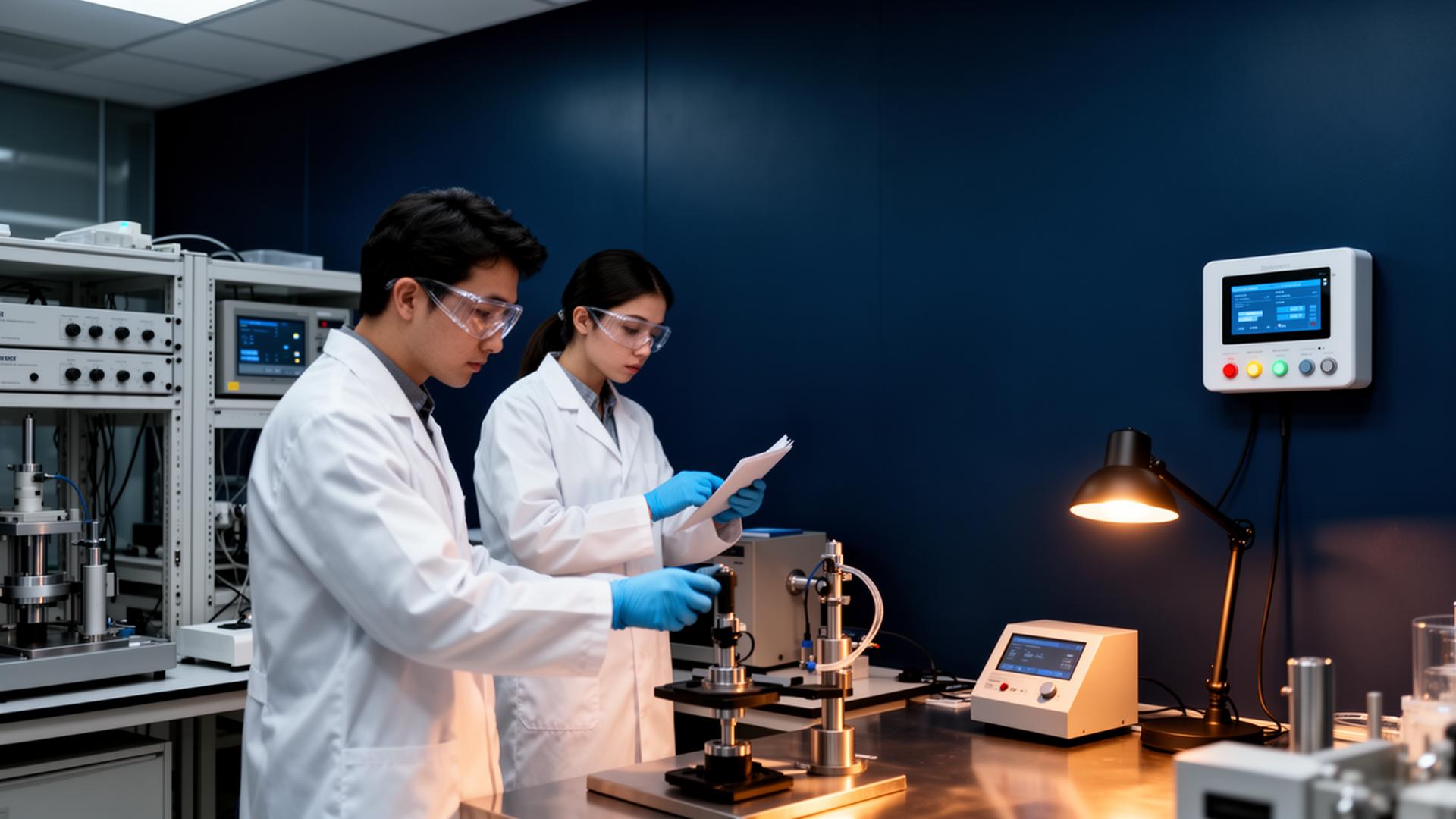
The facility is part of a global group with over 100 years of experience in the power management sector and manufacturing operations across 175 countries. All material testing needs for the group are served from a large multi-lab test center, where testing activity generates noise, dust, heat and various gases across 51 laboratories — making a structured digital approach to indoor environment monitoring essential.
Facility Highlights
Challenge
Environments That Cannot Be Left Unmonitored
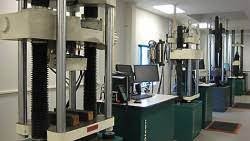
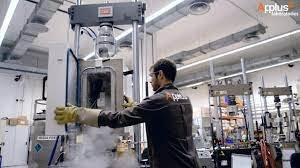
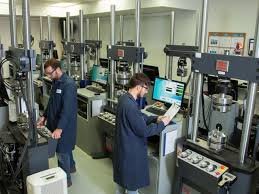
Testing processes across 51 labs continuously generate noise, dust, heat and various gases — making the indoor environment potentially unsafe without continuous tracking. A centralized real-time system was needed to monitor temperature, humidity, light, noise, O₂, TVOC, NO₂ and particulate matter across every lab, with year-long logs for compliance and trend analysis.
Main goals: protect employee health and performance, give the Facility Manager a single-pane view of every lab, generate real-time deviation alerts, and maintain a complete annual record for regulatory and HVAC decision-making.
Solution
A detailed sensor-first study of all 51 test laboratories was conducted — covering testing processes, machines, physical layout and the specific air-quality parameters impacted. Based on this, a multi-sensor station for Air Quality and Environment was selected for each lab and integrated into the ADVAIT IIoT platform.
Solution Components
Sensor-First, Lab-by-Lab Study
Existing workflows and HVAC behaviour for each laboratory were jointly studied with the Facility team. Sensor selection, placement and alert thresholds were tuned to the specific test machines and gases generated in each lab — defining the digital target state before deployment.
Result
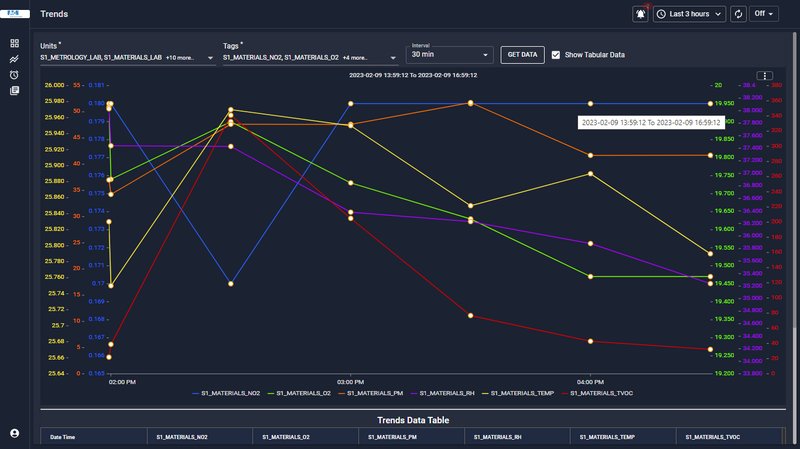
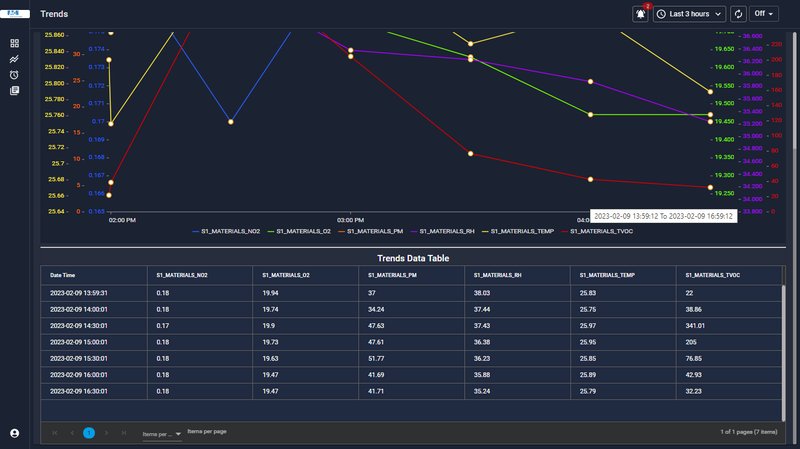
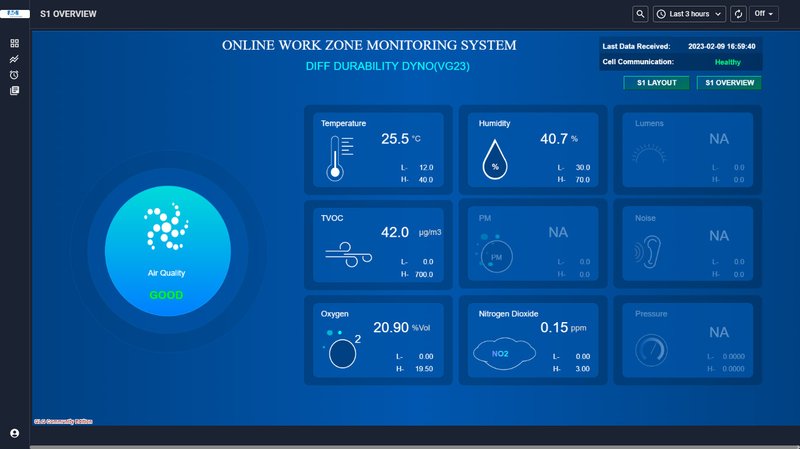
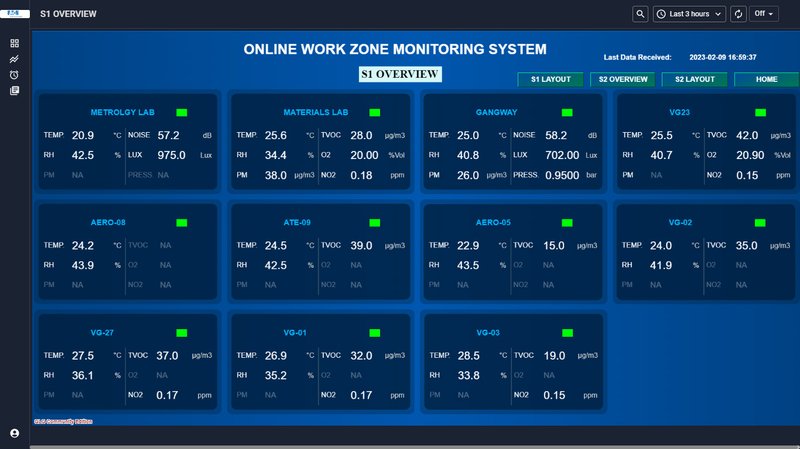
The solution delivered real-time centralized monitoring of work-environment data across all 51 Test Laboratories in two buildings. Each lab has its own dashboard with basic analytics of environment parameters, making the Facility Manager’s task significantly simpler for taking corrective actions. The ADVAIT system was also connected to the Building Management System, which drives a large digital display in the entrance lounge scrolling each lab’s dashboard — building employee confidence in the working environment.
Benefits Delivered
- ✓Centralized Real-Time Visibility — 51 labs across 2 buildings monitored on a single ADVAIT platform.
- ✓Per-Lab Dashboards & Analytics — each laboratory has its own dashboard with basic analytics for faster corrective action.
- ✓HVAC Decision Support — actionable insight for HVAC adjustment and Facility Manager interventions.
- ✓Year-Round Compliance Logging — complete annual record of all parameters for regulatory and health compliance.
- ✓BMS & Lobby Display Integration — live environment data scrolled at the entrance, building employee confidence.
- ✓Healthy & Safe Workspaces — measurable improvement in indoor environment control across hazardous test labs.
By combining lab-by-lab sensor study with a unified IIoT platform, indoor environment management moves from periodic checks to continuous, evidence-based control — protecting people and compliance at once.— Based on TAS India’s Indoor Environment Monitoring Philosophy
Healthy Workspaces, Measured Continuously
This engagement shows how multi-parameter sensing, an industrial IoT gateway and a cloud analytics platform can turn 51 disconnected laboratories into a single, observable indoor environment — safe for people, compliant by record, and actionable for HVAC operations.
The modular architecture scales: additional labs, buildings, parameters and downstream BMS integrations can be added incrementally without redesign — protecting the investment as the facility grows.
Make every workspace safe, measurable, and compliant
From sensor selection to real-time dashboards — TAS delivers end-to-end indoor environment monitoring.