Quality 4.0 Solutions
Transforming quality management from inspection-based control to real-time, data-driven, predictive quality excellence.
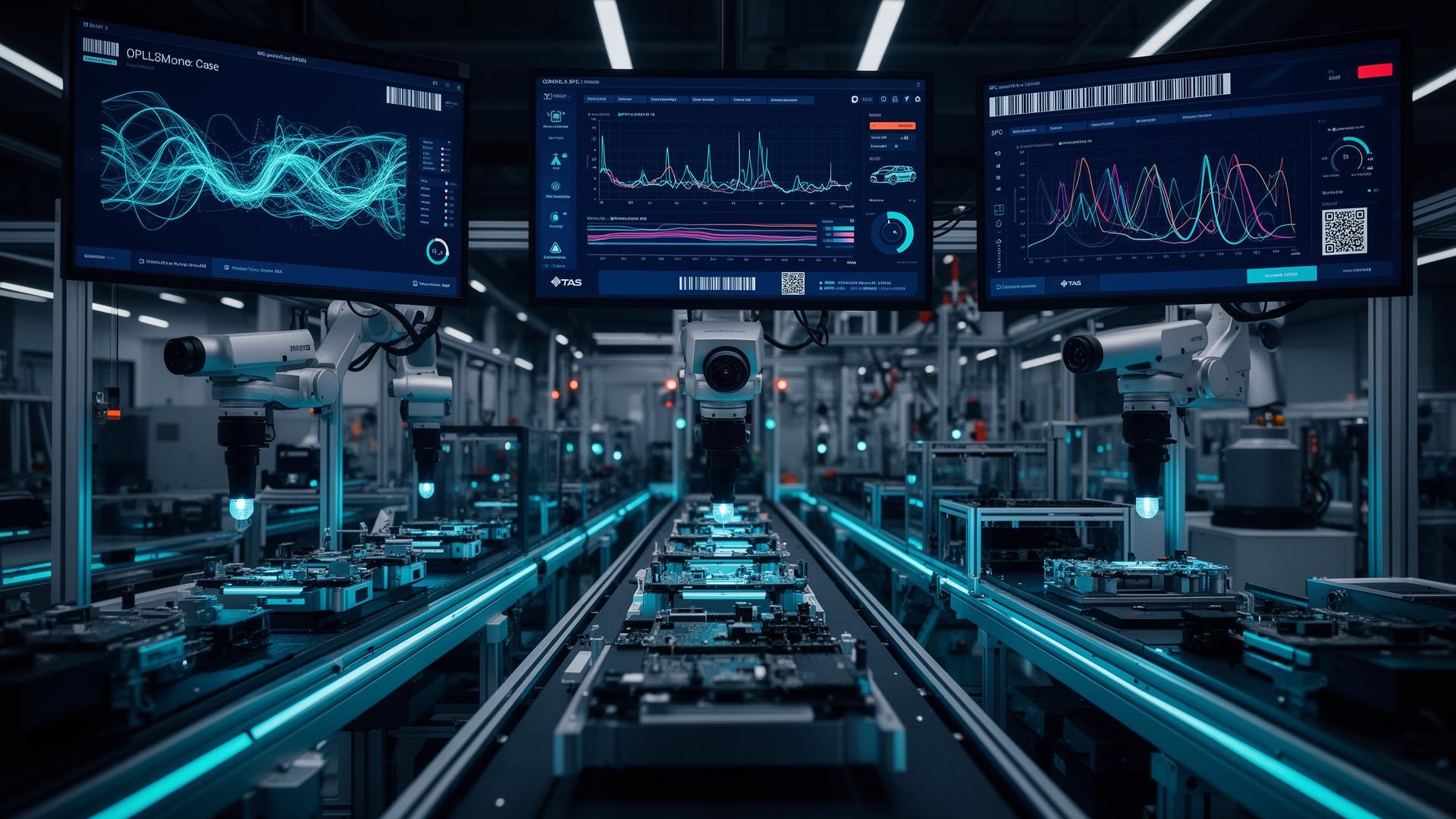
TAS helps manufacturing and process industries modernize quality operations by connecting shop-floor systems, inspection workflows, production data, laboratory results, and enterprise systems into a unified quality intelligence layer. Our Quality 4.0 approach enables better traceability, faster root-cause analysis, improved first-pass yield, and audit-ready quality governance.
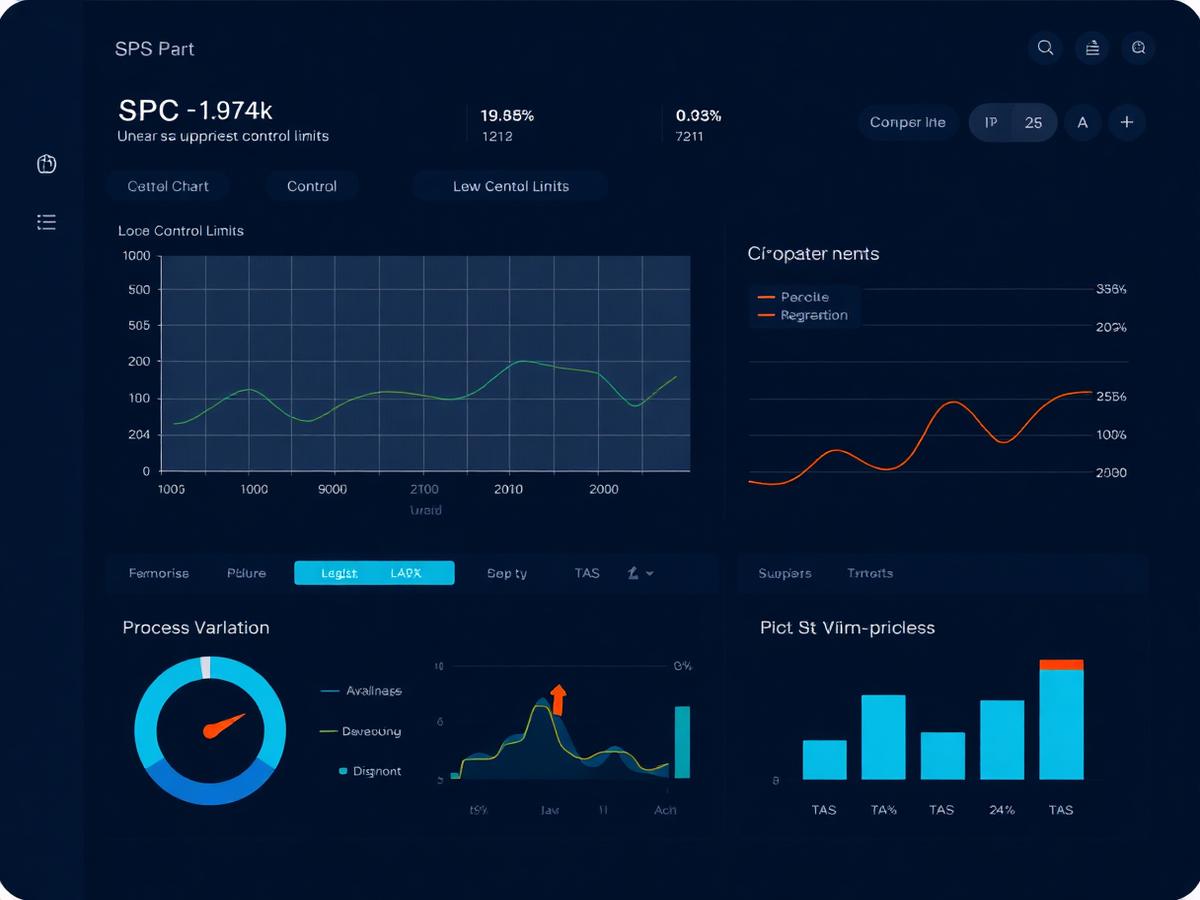
SPC & Process Capability
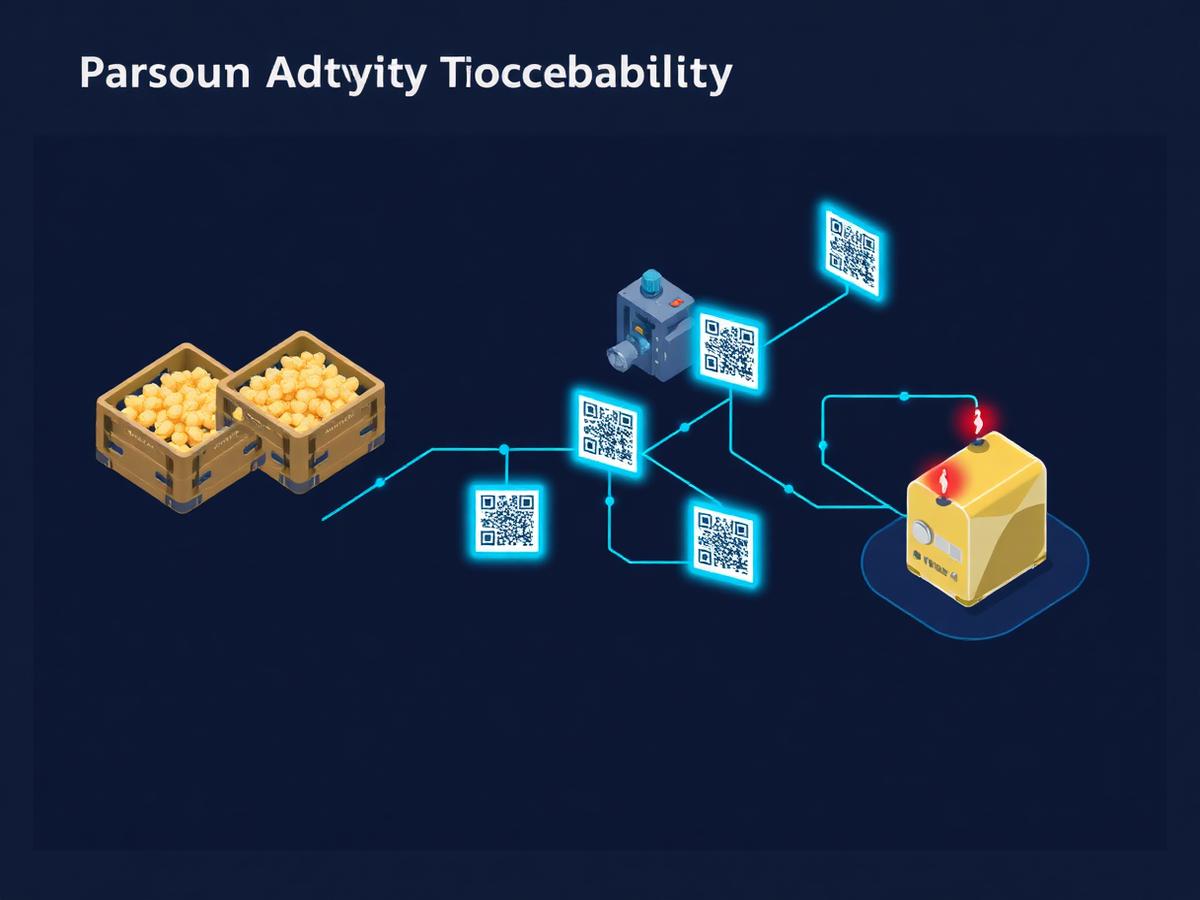
Traceability & Genealogy
NCR / CAPA Workflows
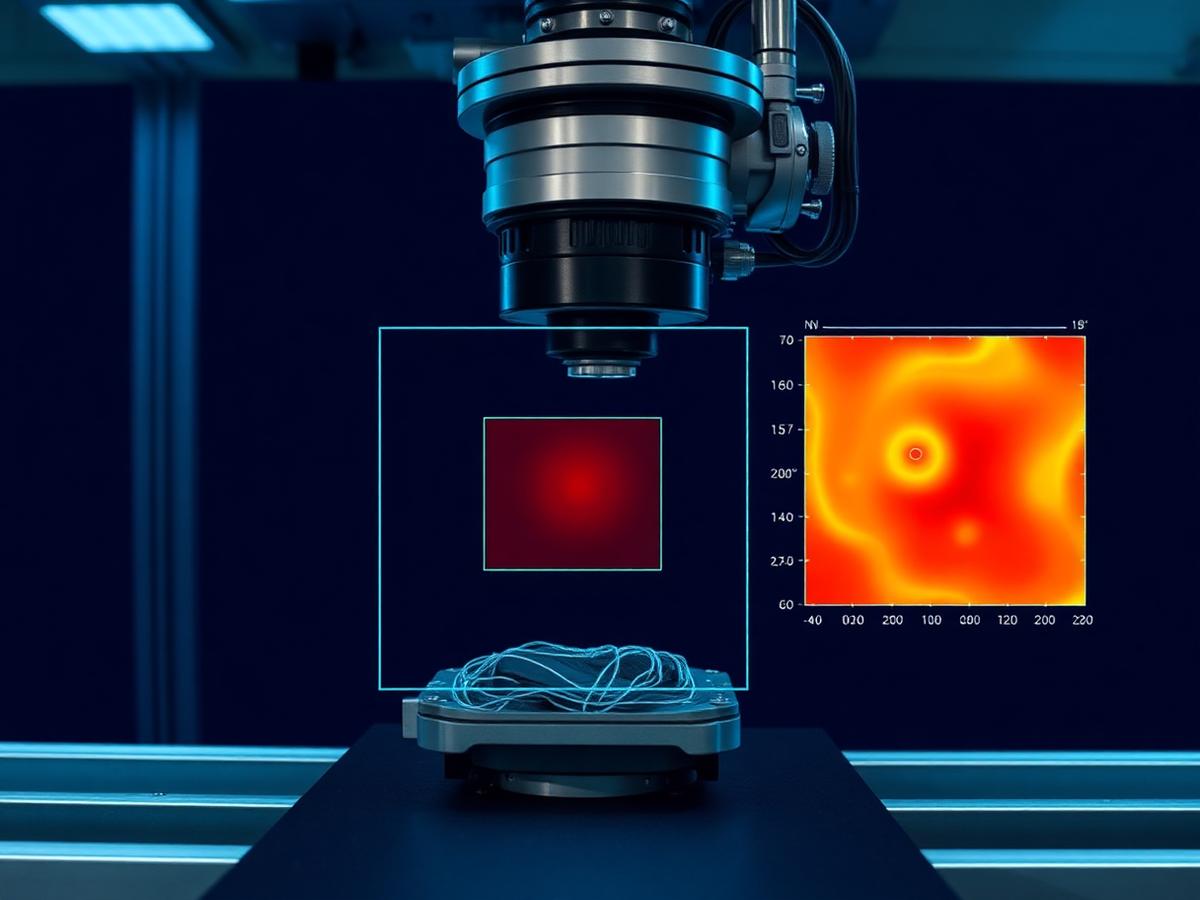
AI Defect Analytics
Audit-Ready
From Reactive Quality Control to Predictive Quality Intelligence
Quality teams are under pressure to reduce defects, improve consistency, meet compliance expectations, and provide traceability across every stage of production. Traditional quality systems often depend on manual inspection records, disconnected spreadsheets, delayed reporting, and reactive corrective actions.
Quality 4.0 brings together industrial data, digital workflows, analytics, machine connectivity, and AI-driven insights to create a closed-loop quality ecosystem. It allows teams to identify variation early, correlate quality issues with process conditions, and act before defects turn into scrap, rework, customer complaints, or compliance exposure.
Digitized Quality Operations
Replace manual quality records with structured digital inspection, test, approval, and reporting workflows.
Real-Time Quality Visibility
Connect production, process, inspection, and laboratory data for live quality performance monitoring.
Predictive Quality Improvement
Use analytics and machine learning to identify defect patterns, process drift, and quality risk indicators early.
Key Solution Capabilities
Building blocks that span digital inspection, analytics, traceability, and enterprise integration — assembled to fit each plant’s existing systems.
Digital Inspection & Test Management
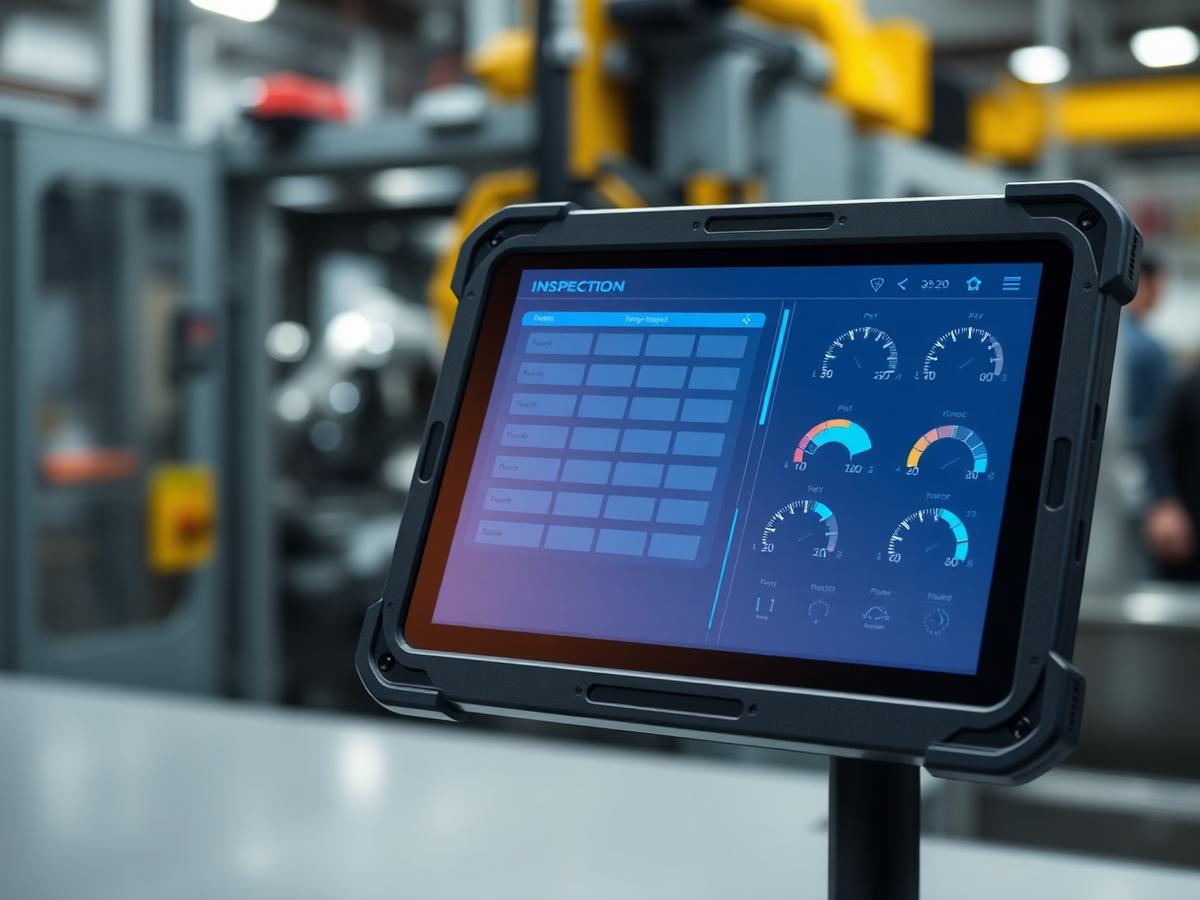
Digitize inspection plans, test checkpoints, sampling procedures, operator entries, and approval workflows. Enable structured quality data capture from production lines, machines, instruments, and manual inspection stations.
SPC & Process Capability Analytics
Monitor process variation using SPC charts, control limits, trend analysis, Cp/Cpk indicators, and deviation alerts. Help quality and production teams understand whether the process is stable, capable, and within acceptable limits.
Traceability & Genealogy
Track product, batch, lot, serial number, machine, operator, recipe, material, supplier, and process history. Build end-to-end traceability for faster containment and investigation during quality deviations or customer complaints.
Non-Conformance & CAPA Workflows
Manage non-conformance reporting, deviation handling, root-cause analysis, corrective actions, preventive actions, approvals, and closure tracking through digital workflows.
AI-Based Visual & Defect Analytics
Support AI-assisted visual inspection, defect classification, image-based quality verification, and anomaly detection where applicable. The architecture allows integration with industrial cameras, vision systems, and external AI models.
Quality Dashboards & KPI Monitoring
Provide role-based dashboards for plant quality teams, production managers, QA heads, and leadership. Track first-pass yield, rejection rate, rework, scrap, inspection backlog, deviation trends, and customer quality indicators.
MES, SCADA, PLC & ERP Integration
Integrate with shop-floor systems, PLCs, SCADA, historians, MES, ERP, LIMS, barcode systems, weighing systems, vision systems, and reporting platforms to avoid isolated quality data islands.
Audit & Compliance Readiness
Maintain controlled records, approval history, digital evidence, deviation logs, test results, version-controlled quality plans, and audit-ready reports for regulated and quality-sensitive industries.
Connected Quality Architecture
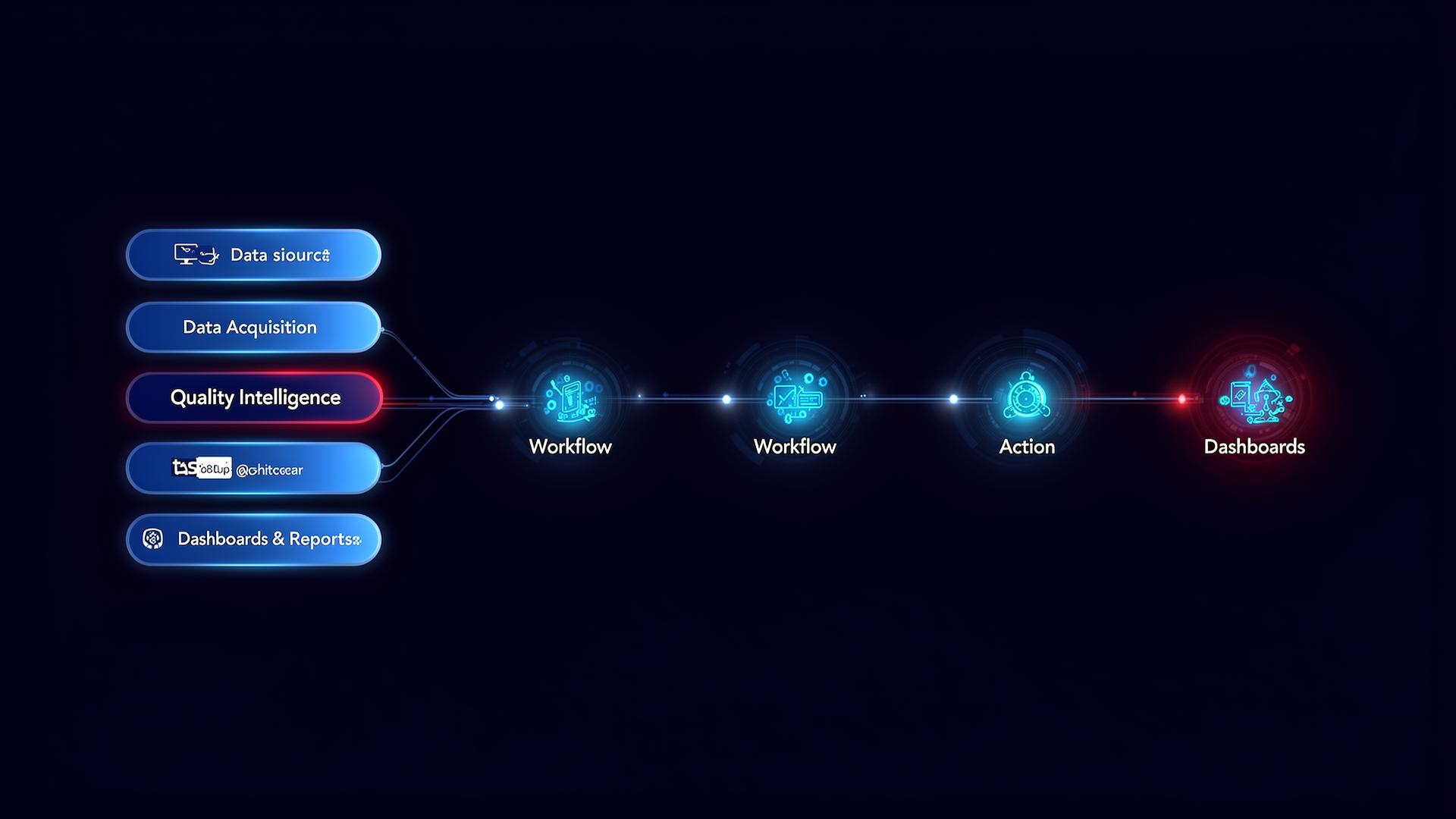
A layered reference architecture that connects shop-floor data, contextualization, intelligence, action workflows, and reporting into a single closed loop.
Data Sources
PLC, SCADA, machines, test benches, weighing systems, barcode scanners, vision cameras, lab systems, manual inspection stations, ERP, MES.
Data Acquisition & Contextualization
Industrial protocol connectivity, tag mapping, batch/lot/serial context, equipment mapping, production order mapping, operator and shift context.
Quality Intelligence Layer
SPC, rules engine, deviation detection, process-quality correlation, defect analytics, inspection workflow, quality KPI calculation.
Workflow & Action Layer
NCR, CAPA, approvals, alerts, escalation, containment actions, rework workflows, audit trail.
Dashboards & Reports
Quality dashboards, compliance reports, customer quality reports, production quality review, management summary, analytics reports.
TAS can implement this architecture using customer-specific technology stacks, existing plant systems, TAS software accelerators, cloud platforms, or on-premise deployments based on project requirements.
Where Quality 4.0 Creates Business Impact
Practical applications across discrete and process manufacturing, from line-level inspection to enterprise-level quality investigation.
Manufacturing Line Quality
Monitor production quality in real time, detect abnormal patterns, and reduce inspection delays.
Batch & Recipe Quality
Correlate quality results with recipe parameters, batch history, material lots, and process conditions.
Incoming Material Quality
Digitize supplier inspection, material acceptance, rejection, and quality history.
Final Product Inspection
Capture final inspection results, test reports, barcode/serial traceability, and dispatch quality status.
Process Deviation Analysis
Identify the relationship between process drift, machine condition, operator actions, environmental conditions, and quality issues.
Customer Complaint Investigation
Use traceability and genealogy records to rapidly investigate affected lots, machines, batches, operators, and process conditions.
Expected Business Outcomes
Outcomes are project-specific, but the operating pattern repeats across deployments — visibility first, then control, then continuous improvement.
Reduced Scrap & Rework
Identify quality issues early before they become large-scale production losses.
Improved First-Pass Yield
Use process visibility and structured quality checks to improve right-first-time manufacturing.
Faster Root-Cause Analysis
Correlate quality failures with production parameters, machine events, materials, and operator actions.
Better Traceability
Maintain complete product, batch, lot, and process genealogy for compliance and customer confidence.
Audit-Ready Records
Replace scattered manual records with structured, searchable, and controlled quality documentation.
Continuous Improvement
Use analytics to identify recurring quality issues and drive systematic improvement initiatives.
Our Implementation Approach
A milestone-based engagement that goes from quality process assessment to phased plant-wide rollout.
Quality Process Assessment
Understand current quality workflows, inspection methods, data sources, reporting gaps, and compliance expectations.
Digital Quality Architecture
Define the solution architecture covering machines, systems, users, data flow, workflows, dashboards, and integration points.
Data Connectivity & Context Mapping
Connect production systems, inspection stations, equipment data, ERP/MES references, barcode systems, and quality master data.
Workflow Digitization
Implement inspection workflows, deviation workflows, approvals, NCR/CAPA processes, and quality reporting structures.
Analytics & Dashboard Deployment
Deploy dashboards, SPC analytics, deviation alerts, process-quality correlation views, and management reports.
Continuous Improvement & Scale-Up
Support phased rollout across lines, plants, products, equipment groups, and advanced analytics use cases.
Relevant Industries
TAS Quality 4.0 solutions apply across discrete, process, regulated, and high-mix manufacturing environments.
Why TAS for Quality 4.0
TAS brings a practical combination of industrial automation, SCADA, IIoT, software engineering, data analytics, and enterprise integration experience. This allows us to design Quality 4.0 solutions that are not limited to dashboards alone, but are connected deeply with plant-floor operations, real production workflows, and customer-specific business requirements.
Strong OT + IT Capability
Ability to connect machines, PLCs, SCADA, historians, databases, enterprise systems, and cloud/on-premise platforms.
Industrial Domain Understanding
Experience across automation, process control, manufacturing, utilities, and industrial software systems.
Flexible Deployment Models
Support for on-premise, edge, private cloud, hybrid, and customer-specific deployment models.
Outcome-Focused Delivery
Focus on measurable improvements in quality visibility, traceability, defect reduction, and operational governance.
Ready to Modernize Your Quality Operations?
TAS can help you design and implement a practical Quality 4.0 roadmap aligned with your plant systems, production workflows, compliance needs, and digital transformation goals.